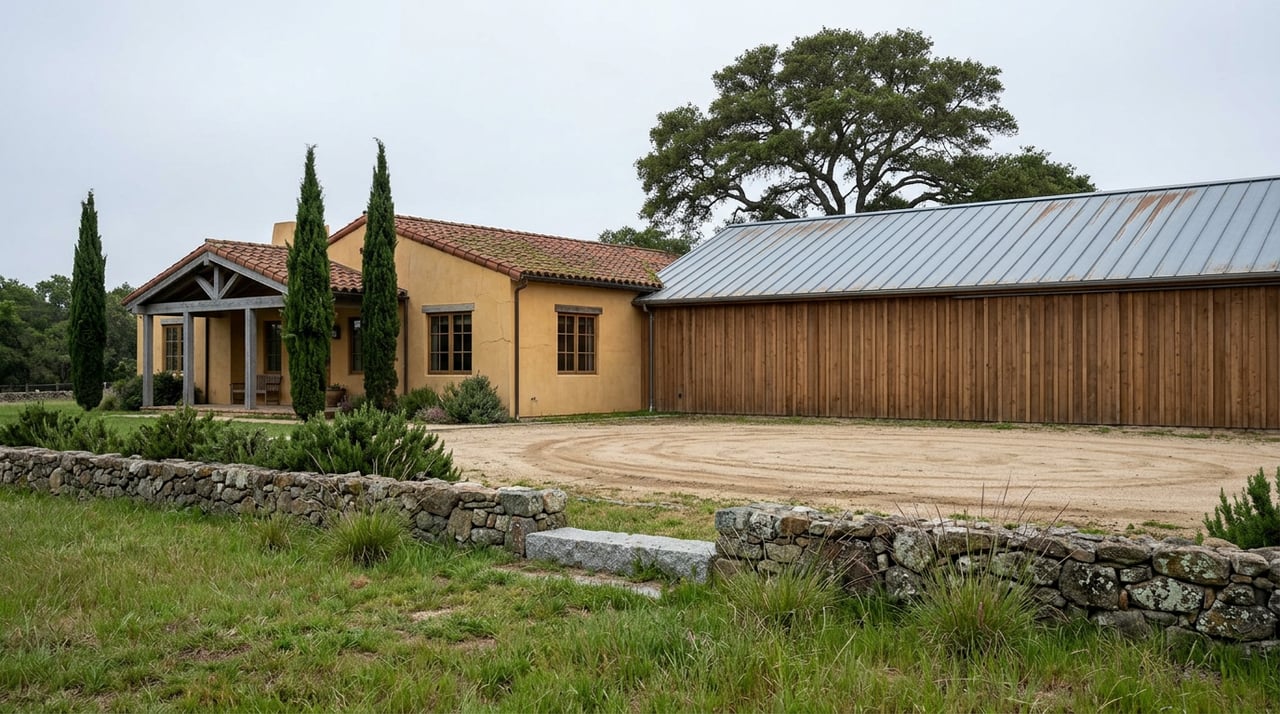
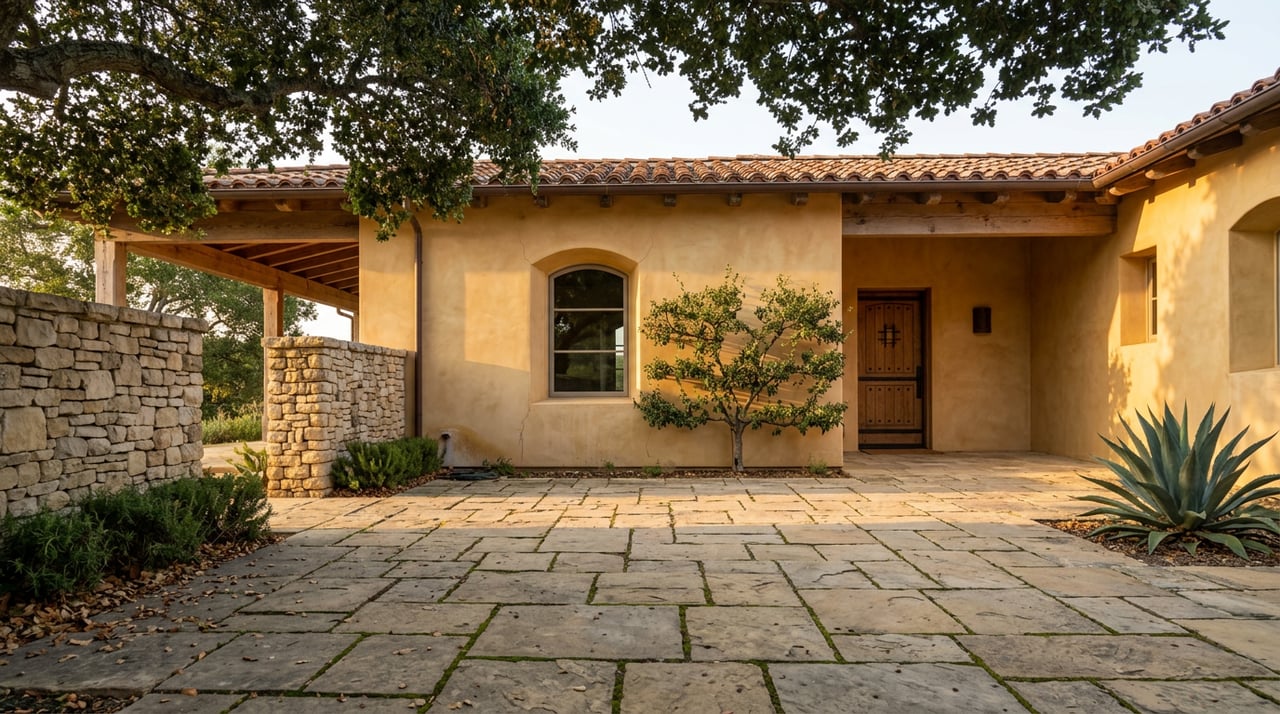
Last year, Robb Report ran a piece on a $25 million listing at 3350 Stoneridge Lane, an Assembledge+ design that put Heidi Klum a few doors down from her new neighbors, in a gated cul-de-sac of eleven homes off Mulholland Drive. Allen Roth of Sotheby's International Realty held the listing. It read like a straightforward luxury feature: architecture, a famous neighbor, a number with a lot of zeros.
What that story didn't need to mention, because it wasn't the point of the story, is that a home at that price sits well inside the highest tier of the City of Los Angeles's transfer tax on high-value sales, known informally as the mansion tax and formally as Measure ULA. Most guides to that tax walk a seller through how to stay under the line. In Stoneridge Estates, staying under the line was never realistic. The enclave's homesites have historically started in the mid five millions and run past $10 million even before you get to a listing like the one at 3350. Every seller here is already past the threshold. The only question the tax leaves open is which of two tiers you land in, and by how much.
What Changed on July 1
Measure ULA took effect on April 1, 2023, and the City's Office of Finance adjusts its dollar thresholds every July 1 based on the Chained Consumer Price Index. Hanson Bridgett reports that through June 30, 2026, the tax applied a 4 percent rate to sales between $5,300,000 and $10,599,999, and 5.5 percent to anything at $10,600,000 or above. As of July 1, 2026, those numbers moved to $5,400,000 and $10,900,000.
That is a modest shift in percentage terms and a real one in dollar terms for a neighborhood where most transactions land inside or near those bands. Here is what the current thresholds actually cost at price points that correspond to where Stoneridge homes have sold and listed:
| Sale Price | Rate (effective July 1, 2026) | ULA Tax Owed |
|---|---|---|
| $5,400,000 | 4% | $216,000 |
| $8,000,000 | 4% | $320,000 |
| $10,899,999 | 4% | ~$436,000 |
| $10,900,000 | 5.5% | $599,500 |
| $16,000,000 | 5.5% | $880,000 |
| $25,000,000 | 5.5% | $1,375,000 |
Notice what happens at the boundary. A sale that closes one dollar below $10,900,000 owes roughly $436,000. A sale that closes exactly at $10,900,000 owes $599,500. That jump of more than $163,000 is the entire tax difference for one dollar of sale price, and it is why sellers whose homes sit near that line have real reason to think carefully about how a negotiation ends, not just where it starts.
The Tax Doesn't Know What You Paid
Here is the part that catches sellers off guard, and it matters more in a neighborhood like Stoneridge Estates than almost anywhere else in the city. It is calculated on the full gross sale price, with no adjustment for what the seller originally paid, what they spent on improvements, or what they still owe on the mortgage. A seller who bought decades ago and a seller who bought five years ago at a much higher basis pay the identical dollar amount on an identical sale price.
In practice this means two sellers on the same street can experience the exact same ULA bill as very different events. For an owner who has held a Stoneridge home for a long time, a few hundred thousand dollars in transfer tax is a line item against a large amount of appreciation. For an owner who bought more recently, closer to the top of a prior cycle, that same dollar figure eats a much bigger share of whatever equity actually changed hands. The tax doesn't ask which seller you are. It only asks what the closing statement says.
An Enclave That Doesn't Behave Like the Rest of the Threshold
Part of what makes this arithmetic sharper in Stoneridge Estates than in a typical Los Angeles neighborhood is the shape of the place itself. It's eleven homes, most reached directly off the Stoneridge Lane cul-de-sac, with one exception: a single lot near the end of the street sits off the main line, reached by its own driveway and an easement shared between two neighboring properties. That lot also happens to carry one of the enclave's largest homes, at roughly 11,600 square feet on close to five acres. A home that size, on a lot that size, is not a candidate for the lower tier. It is a candidate for the top of the table above.
That is the practical reality sellers here are pricing against. In most Los Angeles luxury pockets, Measure ULA is a question of whether a sale crosses a line. In an eleven-home enclave where entry-level homesites have historically started above $5.6 million and the top of the range now sits at $25 million, the line has already been crossed before a listing agreement is signed. The decision left to the seller isn't whether to trigger the tax. It's how to structure the transaction so the number on the closing statement doesn't land somewhere worse than it has to.
Structuring the Sale, Not Just Setting the Price
The actual room to manage its impact shows up in three places:
- Timing around the July reset. Thresholds move every July 1. A sale that closes in June under the prior year's numbers and one that closes in July under the new numbers can owe a different amount on the same price, particularly for homes priced close to either boundary.
- Whether the deal is negotiated privately. Stoneridge Estates has historically shown very limited public inventory at any given time, and sellers of high-value homes across Los Angeles have shown growing interest in off-market sales as a way to control timing and terms. An off-market sale can give a seller more control over how and when a deal closes.
- Negotiation leverage. In a market with as little competing inventory as Stoneridge Estates, sellers have limited leverage.
None of these levers make the tax disappear. They are the difference between a seller who understands the mechanics before writing a listing agreement and one who discovers the number for the first time at the closing table.
What's Still Unsettled
The thresholds you're reading here reflect what's in effect as of today, and they are not guaranteed to stay this way for long. In January 2026, the Los Angeles City Council declined to send a proposed rewrite of Measure ULA, backed by Councilmember Nithya Raman, to the June ballot, which means the current structure stays in place for now. Separately, a statewide ballot initiative backed by the Howard Jarvis Taxpayers Association is aiming for the November 2026 ballot with language that could cap or restrict municipal transfer taxes like this one across California. Nothing has changed the law yet. But a seller weighing a listing timeline over the next several months is weighing it against a tax that has already moved once this year and could see broader change by year's end.
FAQ
Stoneridge Estates sits inside the City of Los Angeles regardless of which neighborhood name is used locally.
Will the thresholds change again before I sell? They adjust every July 1 based on the Chained Consumer Price Index, so yes, they will move again next July regardless of what happens with any ballot measure in the meantime.
Could Measure ULA be repealed before I list? Not on its own timeline. The City Council left the current structure in place in January 2026. A statewide initiative that could restrict transfer taxes like this one is aiming for the November 2026 ballot, but as of today nothing has changed the law that applies to a sale closing this year.
If you're weighing a sale in Stoneridge Estates and want the actual math run against your specific price point and timeline, Mark Kojac can walk through it with you. Get a Free Home Valuation.
This article is general information, not legal, tax or financial advice. Consult a qualified professional about your situation.